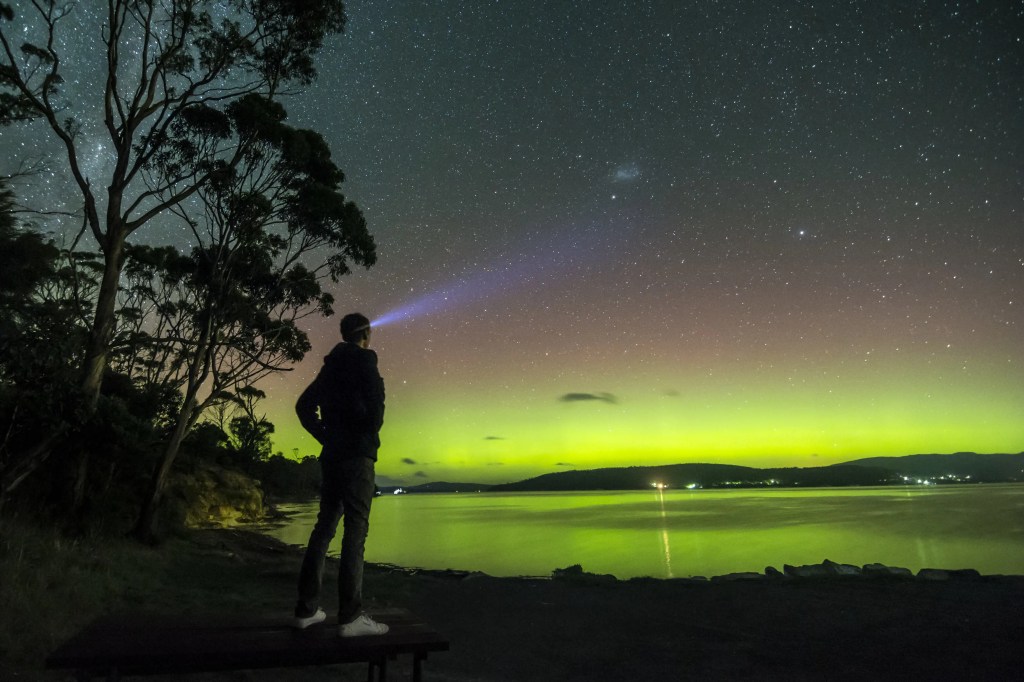
Are you in Tasmania and want to witness Southern Lights live?
First of all, you need to know that there are certain places in Tasmania where you can see Southern Lights, not everywhere.
In this guide, we’ll reveal the best spots in Tasmania to witness Southern Lights. Moreover, we will reveal the best time to visit Tasmania for Southern Lights. So, without further ado, let’s start!
What Causes the Southern Lights?
The Southern Lights are a result of complex interactions between the Earth’s magnetic field and charged particles from the sun. Solar winds carry these particles across space, and when they collide with atoms and molecules in Earth’s upper atmosphere, they release energy in the form of light. This process creates the stunning displays of color that we see as auroras.
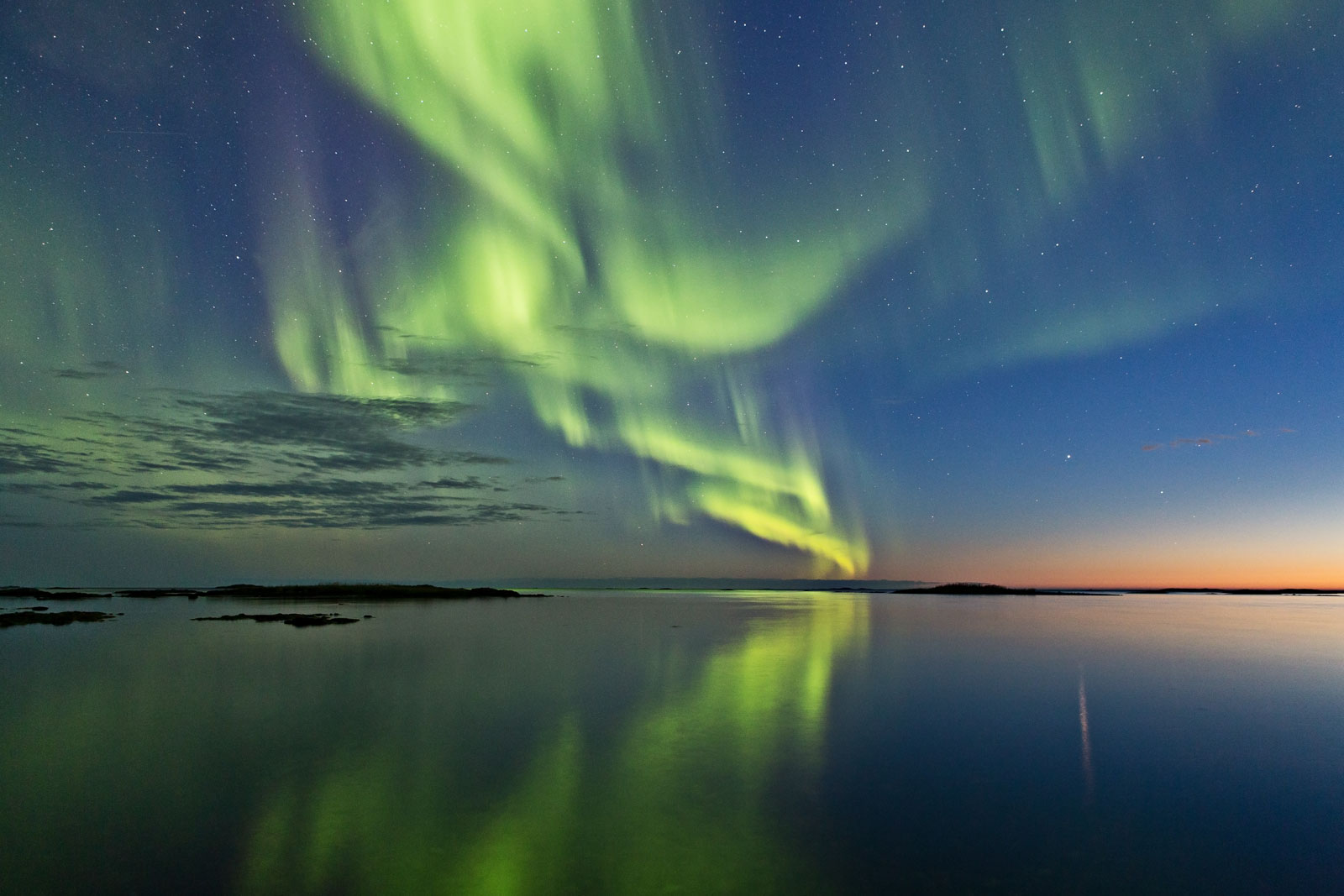
The sun’s activity follows an 11-year cycle, with periods of high and low solar activity. During solar maximums, the sun emits more charged particles, increasing the frequency and intensity of auroral displays. The current solar cycle began in December 2019 and is expected to peak around 2025, making the coming years an excellent time to witness southern lights.
The Earth’s magnetic field plays an important role in directing these charged particles towards the poles. As the particles spiral along magnetic field lines, they concentrate in the polar regions, which is why auroras are typically seen at high latitudes. However, during strong geomagnetic storms, the auroral oval can expand, making it visible from lower latitudes like Tasmania.
The colors of the Southern Lights depend on which atmospheric gases the charged particles interact with and at what altitude. Oxygen molecules produce green and red colors, while nitrogen is responsible for blue and purple tones. The most common color observed is green, but if you’re lucky you might witness a full spectrum of colors dancing across the night sky.
What’s the Difference Between the Southern Lights and the Northern Lights?
While the Southern Lights (Aurora Australis) and the Northern Lights (Aurora Borealis) are essentially the same phenomenon, there are some key differences that set them apart. Both are caused by the same solar-terrestrial interactions, but they occur in opposite hemispheres of our planet.

The primary distinction lies in their visibility and accessibility. The Northern Lights are more widely known and easier for most people to see because there’s more landmass in the Northern Hemisphere at the right latitudes for optimal viewing. Countries like Iceland, Norway, and Alaska offer opportunities to witness the Southern Lights.
In comparison, the Southern Hemisphere has less accessible land at the ideal latitudes for aurora viewing. Antarctica, which would be the best place to see the Southern Lights, is largely inaccessible to most travelers. This makes locations like Tasmania, southern New Zealand, and parts of southern Chile and Argentina particularly special, as they offer rare opportunities to see the Southern Lights.
Another difference is the timing of peak visibility. Since the Earth’s axis is tilted, the seasons are opposite in the Northern and Southern Hemispheres. This means that while the best time to see the Northern Lights is typically during the winter months (September to March), the Southern Lights are often most visible during the Southern Hemisphere’s winter (March to September).
The constellations visible during auroral displays also differ between the hemispheres. Northern Lights viewers might see the aurora dancing around the North Star (Polaris), while those watching the Southern Lights will see different star patterns, including the Southern Cross.
Also Read: What’s the Best Time to Visit Australia
What is the Best Time to Visit Tasmania for Southern Lights?
Timing your visit to Tasmania for the best chance of seeing the Southern Lights requires careful consideration of several factors. While the Southern Lights can technically occur at any time of the year, certain conditions increase your chances of witnessing this ethereal spectacle.
The prime season for Southern Lights in Tasmania spans from May to August, coinciding with the Southern Hemisphere’s autumn and winter. During these months, the nights are longer, providing more darkness for aurora spotting. The winter solstice in June offers the longest nights, maximizing your viewing window.

However, it’s important to note that auroral activity doesn’t follow a strict seasonal pattern. It’s more closely tied to solar activity and geomagnetic conditions. Monitoring space weather forecasts can help you predict periods of heightened auroral activity. Websites and apps that track the Kp index, a measure of geomagnetic activity, can be valuable tools for aurora chasers.
Clear skies are important to view Southern Lights, so consider Tasmania’s weather patterns when planning your trip. While winter offers longer nights, it can also bring more cloud cover and precipitation. The shoulder seasons of autumn (March to May) and spring (September to November) often provide a balance between dark nights and clearer skies.
Keep in mind that seeing the Southern Lights requires patience and a bit of luck. Even during peak seasons, there’s no guarantee of a sighting. Plan to stay in Tasmania for at least a week to increase your chances of catching a clear night with auroral activity.
Where is the Best Place in Tasmania to See the Southern Lights?
Tasmania’s southern location and relatively low light pollution make it one of the best places in Australia to witness the Southern Lights. However, some locations on the island offer better viewing opportunities than others.
The southern coast of Tasmania provides some of the best vantage points for aurora watching. Cockle Creek, the southernmost point accessible by road in Australia, is one of the best places in Tasmania to see the Southern Lights. Its remote location ensures minimal light pollution, and its unobstructed views over the Southern Ocean create perfect conditions for spotting the lights.

Bruny Island, just off the southeastern coast of Tasmania, is another excellent location. The island’s South Bruny National Park offers dark skies and panoramic views of the southern horizon. The Neck, a narrow isthmus connecting the north and south parts of the island, is a particularly good viewing spot.
If you are near Hobart, Mount Wellington (kunanyi) is a good point to view Southern Lights. On clear nights with strong auroral activity, the lights can sometimes be seen from the mountain’s summit. However, be prepared for cold temperatures at this elevation, especially during winter months.
The Tasman Peninsula, home to the historic Port Arthur site, is another prime location for aurora viewing. Its southern location and coastal vantage points offer excellent opportunities to see the lights reflecting off the water, creating stunning scenes for photographers.
While these locations are known for their aurora-viewing potential, remember that the Southern Lights can be visible from many parts of Tasmania during strong geomagnetic storms. The important thing is to find a dark location away from city lights with a clear view of the southern horizon.
Can I See Southern Lights with My Eyes in Tasmania?
The answer is yes but with some caveats.
Under ideal conditions – during strong geomagnetic storms, on clear, moonless nights, and from dark locations – the Southern Lights are visible to the naked eye from Tasmania. However, what you see with your eyes may differ from the vibrant, colorful displays often seen in photographs.
To the naked eye, auroras often appear as shifting curtains or pillars of light in the sky. They might look grey or white at first, especially if the display is faint. As your eyes adjust to the darkness (which can take up to 30 minutes), you may start to perceive colors, typically pale green or pink hues.
It’s also important to understand that cameras can capture more vivid colors and details than the human eye. Long-exposure photography allows cameras to collect light over time, revealing colors and structures that might be too faint for our naked eyes to detect. This is why aurora photographs often show more dramatic and colorful displays than what you might see in person.
The strength of the aurora also plays a role in its visibility. During minor geomagnetic storms, the aurora might only appear as a faint glow on the southern horizon. Stronger storms produce more dynamic and colorful displays visible to the naked eye.
Your location in Tasmania also affects what you’ll see. The further south you are, the better your chances of seeing a more prominent display. Southern coastal areas with unobstructed views of the horizon offer the best opportunities for naked-eye aurora viewing.
To maximize your chances of seeing the Southern Lights with your naked eye:
- Choose a location far from light pollution.
- Allow your eyes to fully adjust to the darkness.
- Look for unusual glows or movements in the sky, particularly towards the south.
- Be patient – auroras can be fleeting, and intensity can vary throughout the night.
- Consider using a camera or binoculars, which can sometimes reveal auroras that are not immediately visible to the naked eye.

 Zojir.com
Leave a comment