
Planning a trip to Uluru and wondering what’s the best time to visit?
Uluru is one of the popular tourist destinations in Australia and every year thousands of people visit to witness this living cultural landscape.
However, you can’t go to Uluru any time of the year as the weather varies throughout the year and it’s good to know the best time to go to Uluru.
In this guide, we will discuss what’s Uluru and what’s so special about the place. Moreover, we will reveal the best time to visit Uluru.
So, without further ado, let’s begin!
What is Uluru?

Uluru is one of Australia’s most iconic natural landmarks – a massive red monolith rising dramatically from the flat desert landscape in the Northern Territory.
This incredible rock formation stands 348 meters tall and is estimated to be around 300 million years old.
Formed from ancient seabed materials including sand, feldspar, and various minerals, Uluru has been shaped over millions of years by weathering and erosion, giving it its distinctive rounded shape and grooved surfaces.
While British explorer William Gosse is credited with its European “discovery” in the 1800s, naming it Ayers Rock, the site has been known to Indigenous peoples for tens of thousands of years.
Today, visitors can experience Uluru by taking the 10-kilometer walking path around its base, though climbing the rock itself is no longer permitted out of respect for its cultural significance.
Also Read: Best Time to Visit Tasmania for Southern Lights
What’s So Special About Uluru?
Uluru holds profound cultural and spiritual significance for Australia’s Aboriginal peoples, particularly the Anangu people (Yankunytjatjara and Pitjantjatjara) who are its traditional custodians.
For them, Uluru isn’t just a remarkable geological formation – it’s a living cultural landscape embedded with sacred sites and ancestral stories.

The rock and its surroundings are central to their Dreamtime beliefs, which explain how ancestral beings created the landscape and established Aboriginal law and culture.
Every groove, cave, and marking on Uluru’s surface is connected to traditional stories and teachings.
The Anangu’s deep spiritual connection to this place continues today, and they actively participate in its protection and management, sharing their cultural knowledge with visitors while maintaining their sacred traditions.
Best Time to Go to Uluru
For the most comfortable and rewarding visit to Uluru, plan your trip between May and September.
During these months, daytime temperatures remain pleasant, typically ranging from 20°C to 30°C, making it ideal for exploring the area on foot.
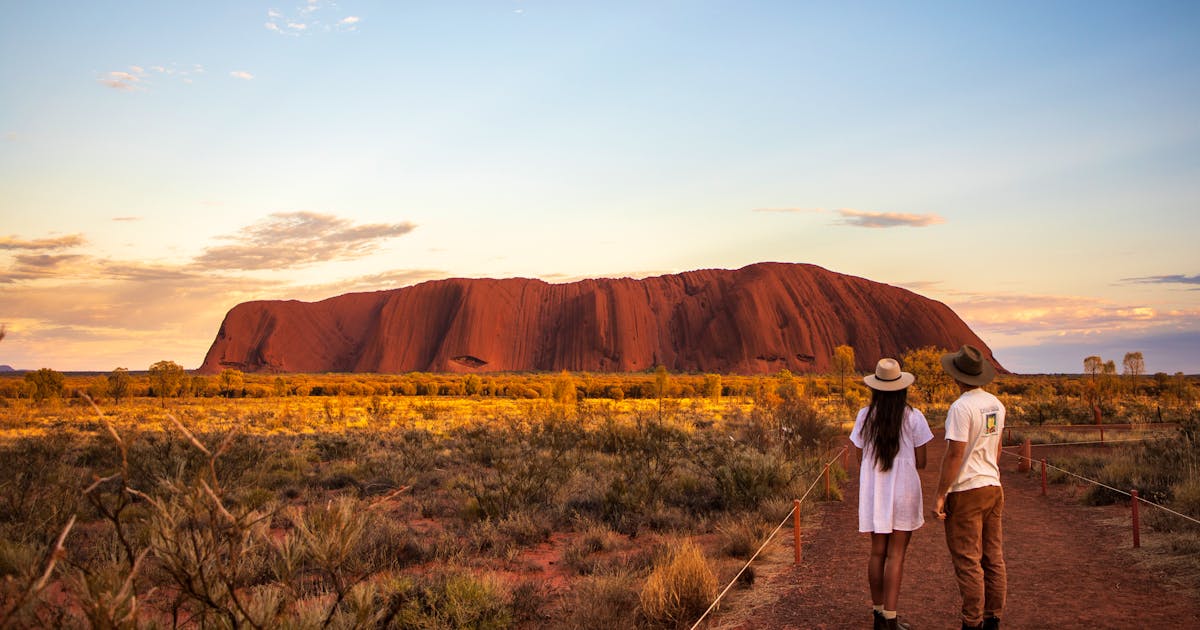
The mild weather creates perfect conditions for walking around the base of Uluru and enjoying the surrounding desert landscape.
However, pack some warm clothing as nighttime temperatures can drop significantly, especially during winter months.
If you’re interested in seeing the place come alive with color, aim for August or September when wildflowers bloom across the park, adding an extra dimension of beauty to this already spectacular site.
Average Temperature in Uluru by Month
| Month | Average High (°C) | Average Low (°C) |
|---|---|---|
| January | 35 | 19 |
| February | 34 | 18 |
| March | 31 | 15 |
| April | 26 | 10 |
| May | 22 | 6 |
| June | 18 | 3 |
| July | 18 | 1 |
| August | 21 | 4 |
| September | 24 | 7 |
| October | 29 | 11 |
| November | 32 | 15 |
| December | 35 | 18 |
Frequently Asked Questions (FAQs)
How many days do you need at Uluru?
You need at least 3 days to fully explore Uluru and enjoy its beauty.
What is the hottest month in Uluru?
The hottest month in Uluru is usually January when the temperature rises up to 37.5° C.
When not to travel to Uluru?
You should not visit Uluru during the months of summer as the temperature goes high and things get unbearably hot. From October to March, the temperature in Uluru is both hot and humid.

 Zojir.com
Leave a reply to What’s the Best Time to Visit Gold Coast? – Zojir Blog Cancel reply